

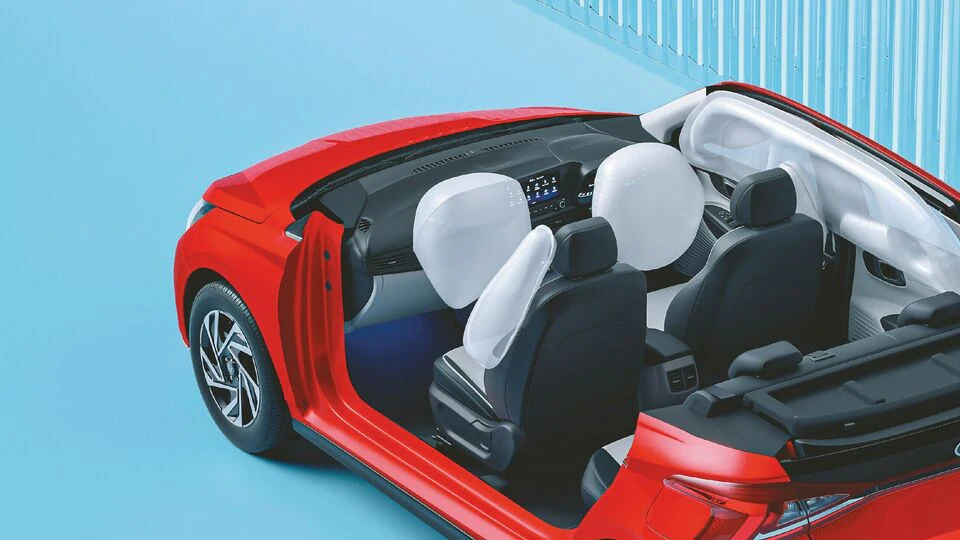
Walking into a car dealership a generation ago, evaluating safety was relatively straightforward. Buyers kicked tires, checked for anti-lock brakes, counted the number of airbags tucked into the pillars, and asked how well the vehicle held up in government barrier crash tests. Safety was largely structural and passive, defined by thick steel frames, crumple zones, and heavy bumpers engineered to absorb impact after a collision was already underway.
Today, the automotive landscape looks fundamentally different. Vehicles have evolved into rolling sensor platforms governed by complex computer algorithms, radar emitters, and optical cameras. While high-strength steel cages and multi-stage airbags remain essential, the frontier of automotive protection has shifted toward active accident prevention.
Yet, navigating the window sticker of a modern vehicle can feel overwhelming. Automakers routinely disguise standardized safety technologies behind proprietary marketing acronyms, confusing consumers about what a car actually does when danger appears. Understanding the foundational safety systems on modern vehicles—and how they operate in the real world—ensures you invest in protections that genuinely keep you and your passengers safe.
Distinguishing Passive Integrity from Active Collision Avoidance
To make an informed purchase, every buyer must first separate safety equipment into two distinct operational categories: passive safety and active safety.
Passive safety features are your last line of defense. They activate only during an impact to protect cabin occupants from kinetic forces. This includes high-strength boron steel passenger cells, side-curtain airbags, collapsible steering columns, and seatbelt pretensioners that cinch down milliseconds before impact.
Active safety, collectively known as Advanced Driver Assistance Systems (ADAS), works continuously to prevent collisions from occurring in the first place. Using a combination of millimeter-wave radar mounted in the grille, ultrasonic sensors in the bumpers, and stereoscopic cameras behind the rearview mirror, active systems scan road geometry, monitor traffic flow, and intervene when human reaction times fall short. An exceptional modern car must excel in both disciplines: surviving a crash while deploying software that avoids one altogether.
Forward Collision Warning and Automatic Emergency Braking
Among all active safety developments, few have demonstrated greater real-world value than Forward Collision Warning (FCW) paired with Automatic Emergency Braking (AEB).
Forward Collision Warning acts as a digital copilot, scanning the road ahead for decelerating traffic, stopped vehicles, or sudden obstacles. If the closure rate indicates an imminent impact, the system issues multi-sensory warnings: flashing heads-up dashboard lights, audible chimes, and haptic pulses through the steering wheel or seat cushion.
If the driver fails to react within a fraction of a second, Automatic Emergency Braking intervenes by applying hydraulic brake pressure automatically. The most advanced iterations of this technology operate across varying speeds and include:
-
Pedestrian and Cyclist Detection: Optical cameras tuned to recognize human silhouettes and bicyclists entering the path of travel, even in low-light environments.
-
Junction and Intersection Turn Assist: Systems that monitor oncoming traffic when making left-hand turns across lanes, automatically anchoring the brakes if a turn would result in a T-bone collision.
When test-driving a prospective vehicle, ask specifically about the operating envelope of its emergency braking system. Some budget configurations only function at low city speeds, while higher-tier systems remain active at highway velocities.
Blind-Spot Monitoring and Rear Cross-Traffic Alert
Highway lane changes and tight parking garage maneuvers account for a massive volume of everyday accidents. The combination of Blind-Spot Warning (BSW) and Rear Cross-Traffic Alert (RCTA) provides an invaluable safety shield where physical mirrors cannot reach.
Blind-spot systems utilize short-range radar modules hidden behind the corners of the rear bumper. When another vehicle enters the driver’s blind zone, a subtle LED icon illuminates on the corresponding side mirror housing or the interior door trim. If the driver activates their turn signal toward an occupied lane, the indicator flashes aggressively and sounds an audible alert. Advanced variants, known as Blind-Spot Intervention, will even apply selective braking to the opposite wheels or exert counter-steering torque to nudge the car back into its lane.
Rear Cross-Traffic Alert applies this same radar coverage in reverse. When backing out of an angled parking space surrounded by oversized SUVs, your physical sightline down the lane is completely blocked. Cross-traffic sensors scan perpendicular corridors up to sixty feet away, alerting you to approaching traffic long before the cross-traffic enters your backup camera’s lens. When paired with Reverse Automatic Braking, the car stops itself before you back into a moving vehicle or a wandering pedestrian.
Lane Keeping Systems: Understanding the Difference Between Assist and Centering
Automakers frequently blur the line between lane safety technologies, leaving drivers confused about how much steering assistance the vehicle actually delivers.
-
Lane Departure Warning (LDW): A passive advisory system. If your tires cross a detected highway lane marker without an active turn signal, the car vibrates the steering wheel or chimes to wake a drifting driver. It takes no mechanical action.
-
Lane Keeping Assist (LKA): A reactive intervention. If the car drifts toward the shoulder, the electric power steering automatically applies gentle corrective torque, ping-ponging the vehicle back away from the edge of the line.
-
Lane Centering Assist (LCA): A proactive, continuous steering aid. Rather than waiting for you to drift, the camera system continuously calculates the center of the lane and makes subtle micro-adjustments to keep the vehicle tracked perfectly in the middle of the corridor.
While Lane Centering Assist significantly reduces physical fatigue on long interstate road trips, buyers must remember that it is a convenience feature, not an autonomous driving pilot. Systems rely entirely on visible painted road markings; heavy rain, snowdrifts, faded highway paint, or direct solar glare can temporarily blind the cameras, handing full control back to the driver without substantial warning.
Adaptive Lighting and Headlight Performance
Illumination is often treated as a styling choice, but headlight performance is one of the most critical active safety factors on any vehicle. Standard halogen bulbs are largely relics; modern vehicles should be equipped with projector-beam LED or adaptive matrix headlights.
Look for vehicles equipped with curve-adaptive headlights. Instead of pointing statically forward, these assemblies mechanically swivel based on steering wheel angle, illuminating the apex of a dark curved road rather than the tree line.
Equally practical is Automatic High-Beam Assist, which toggles high beams on dark rural roads and automatically dips them the instant an oncoming headlight or leading taillight is detected by the windshield camera. By maximizing down-road illumination without blinding fellow motorists, high-beam automation ensures you identify road debris, fallen branches, and wildlife far sooner.
Driver Attention Monitoring and the Reality of Calibration Costs
As safety suites grow more sophisticated, maintaining driver engagement has become a major engineering focus. Driver Monitoring Systems (DMS) utilize infrared steering-column cameras to track facial orientation, eye gaze, and blink rates. If the camera detects that a driver’s eyes have drifted toward a smartphone or closed due to microsleep, the vehicle initiates progressive audio alerts and will eventually bring the car to a controlled stop inside its lane with hazard flashers engaged.
Finally, prospective buyers must consider the long-term ownership costs associated with advanced safety sensors. Cameras mounted behind the windshield require precise optical recalibration whenever a windshield is replaced due to a stone chip. Similarly, a minor low-speed parking tap that cracks a bumper cover can misalign delicate radar units, requiring specialized dealership alignment tools that turn a minor repair into an expensive insurance claim.
A new car purchase represents a major financial commitment, but its primary job is keeping you and your family safe through unpredictable road conditions. By looking past dealership buzzwords and demanding vehicles equipped with robust collision avoidance, vigilant blind-spot monitoring, intuitive lane support, and superior lighting, you ensure that every mile you drive is protected by technology that works when it matters most.

Comments are closed.